The Dog Walking Industry & Choosing the Right Walker for Your Dog
The dog walking industry in the UK is currently completely unregulated. This means anyone… from an experienced animal care professional to a teenager looking for extra pocket money- can set up a business overnight without formal training, qualifications, or legal background checks.
While there are many passionate individuals offering pet care, this lack of oversight leaves dog owners exposed to serious risks. Here is what you need to know about the industry, the UK laws surrounding pet handling, what to look for in a walker, and how to find the perfect fit for your dog's unique temperament.
The Non-Negotiables: Essential Safeguarding & Qualifications
Before booking any walker, ensure they meet these vital safety, legal, and education standards (and don’t be hesitant to ask for proof of qualification):
1. Beware of Underage & Unqualified Handlers (Facebook Ads & Hobbyists)
With local community groups and Facebook marketplace ads filled with cheap dog walking offers, owners must look past low prices and consider the hidden dangers:
Underage Handlers & UK Law: Under the Animal Welfare Act 2006, a child under the age of 16 cannot be legally responsible for an animal. If a child under 16 is walking your dog and something goes wrong, legal responsibility defaults back to the parent or owner.
Invalid Insurance: Specialist pet business insurance providers almost universally require the primary handler to be at least 18 years old. Hiring an underage walker usually means operating completely uninsured. If your dog escapes, gets attacked, or causes an accident, there is zero insurance protection for vet fees or legal liabilities.
Lack of Physical & Behavioural Control: A dog that reacts, bolts, or encounters a threat requires rapid intervention and expert body language reading. Children or inexperienced hobbyists often panic or freeze in high-stress situations.
2. Core Qualifications & Background Checks
Pet Business Insurance: Valid Specialist Public Liability Insurance covering professional handling, transit, and key holding.
Clean DBS Check: Verification that your home keys and property are in trustworthy hands.
Pet First Aid Certification (Vital!): Accidents, cuts, insect stings, torn pads, or sudden illnesses happen out on the trail. A qualified walker must hold a current Pet First Aid qualification and carry a fully stocked trail kit.
Formal Education & Training:
Animal Management Qualifications: Look for at least a Level 2 qualification or higher.
Canine Behaviour Courses: Have they invested in ongoing education covering canine body language, stress signals, arousal levels, and pack dynamics?
Dog Law Coursework: A professional walker should have completed specific training in UK Dog Law to fully understand their legal duties and liabilities while caring for your pet.
Relevant Industry Experience: Ask about their background. Have they worked in veterinary practices, kennels, or animal rescue centres, or did they transition straight from an office job to dog walking? While career-changers can be wonderful, going straight into dog walking without hands-on animal care experience means limited knowledge of complex behaviours. For nervous, reactive, or sensitive dogs, wrong handling can lead to behavioural setbacks and dangerous mistakes. Most walkers that do this will know their limits when they first set up, but there are a few that can be in it just to make a quick penny and take on any dog.
Industry References: Ask for references from other pet owners or professionals in the pet sector (such as vets, trainers, or kennel managers).
📝 Onboarding & Transparency: What to Expect Before the First Walk
A professional walker will never take your dog out without proper administrative intake.
The Onboarding Form: You should always complete and sign a detailed onboarding/booking form before your walker takes your dog into their care. This contract covers emergency vet permissions, medical history, behavioural triggers, and emergency contact details.
Be 100% Honest About Behaviour: The more your walker knows, the safer your dog will be! Never hide behaviour quirks, reactivity, resource guarding, fear of loud noises, or poor recall out of embarrassment. A great walker won't judge- they use this information to tailor management strategies and keep your dog safe and comfortable.
A Good Dog Walker Will Always Put Your Dogs Welfare and A Professional Relationship First: A great dog walker will always be honest about whether you and your pet are the right fit for their service. Sometimes what a dog needs doesn't align with a walker's specific experience- like specializing in large breeds over smaller ones. Other times, the personal connection between a walker and a client just doesn't quite click, and that’s completely okay, too.
If a walker lets you know it’s not the right match, please don't take it personally or feel disappointed. They are putting your dog's well-being and a smooth working relationship first, knowing that forcing a mismatch can do more harm than good. Turning away business is never easy for a self-employed professional, but ensuring the right dynamic for everyone will always come first.
UK Dog Walking Laws: What Every Owner Should Know
Although dog walking isn't licensed by local councils (unless offering home boarding or day care), professional handlers are strictly bound by UK legislation:
Dangerous Dogs Act 1991 / Anti-Social Behaviour, Crime and Policing Act 2014: A handler is legally responsible for keeping any dog under proper control in public spaces. If a dog in their care acts aggressively or causes fear, the walker faces criminal prosecution.
Animal Welfare Act 2006: Handlers have a legal duty to meet a dog's basic welfare needs and protect them from suffering, injury, heat exposure, and over-exertion.
Public Spaces Protection Orders (PSPOs): Local councils enforce rules regarding where dogs must be kept on lead, dog-exclusion zones, and maximum group sizes (often capped at 4 to 6 dogs per handler).
The Control of Dogs Order 1992: Dogs in public must wear a collar with the owner’s contact details, and microchipping remains compulsory.
The Dogs (Protection of Livestock) Act 1953: Walkers must keep dogs under close control or on a lead near livestock.
Understanding Setup Types: What Suit Your Dog's Personality?
Not all dog walking businesses are structured the same way. Understanding the pros, cons, and social media reality of each setup will help you pick what genuinely suits your dog:
1. "Dog Buses" & Large Group Walkers
Customized vans filled with individual crates or open pack areas ("Dog Buses") have exploded on social media.
The Good: For confident, highly social dogs who thrive in intense pack settings, dog buses and large team walks can be brilliant and lots of fun, as well as can be super cost-effective. It means they have more availability and can gets dog socialising with different dogs regularly.
The Reality & Dangers: Social media pictures of packed dog buses look incredibly cute, but social media doesn't tell the full story. For many dogs, being packed tightly into transport with multiple other dogs or walked in large groups up to 12 can cause severe excitement, frustration, or claustrophobic stress. High arousal in tight spaces can trigger fights or overstimulation before the walk even starts. Always assess your dog’s true temperament rather than following social media trends.
2. Enclosed Secure Field Walkers
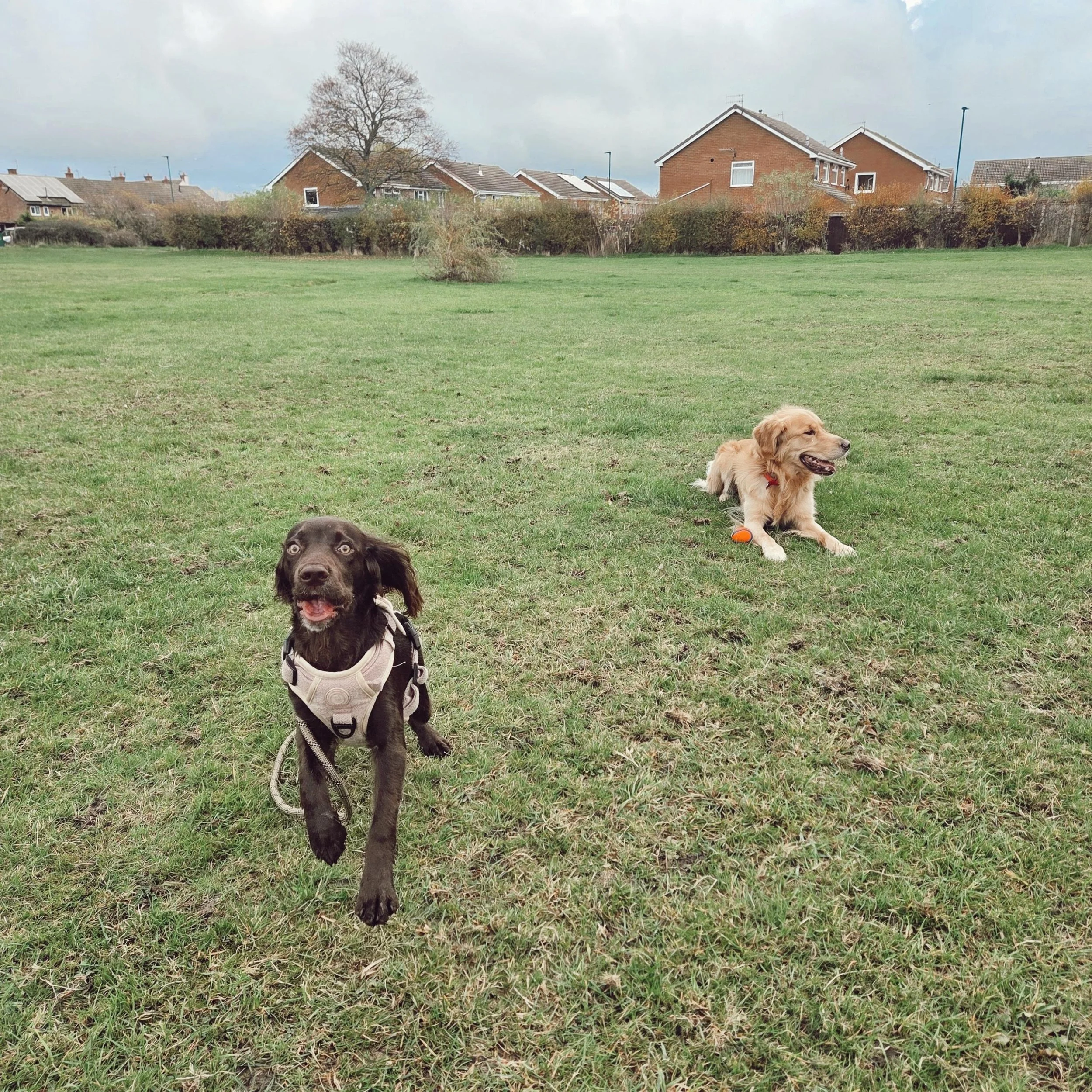
Some walkers rent private fenced paddocks.
Best For: Dogs with zero recall who need off-lead runs, or dogs who love non-stop ball catching and wrestling. These can be also brilliant for stronger, larger dogs or dogs that struggle on the lead with on-lead reactivity.
The Reality: While enclosed fields look great in photos, continuous high-intensity play in a fenced space can easily lead to overarousal, heightened reactivity, or sheer boredom for dogs who prefer to explore new smells rather than play non-stop.
3. Trail & Adventure Small-Group Walking (My Approach)
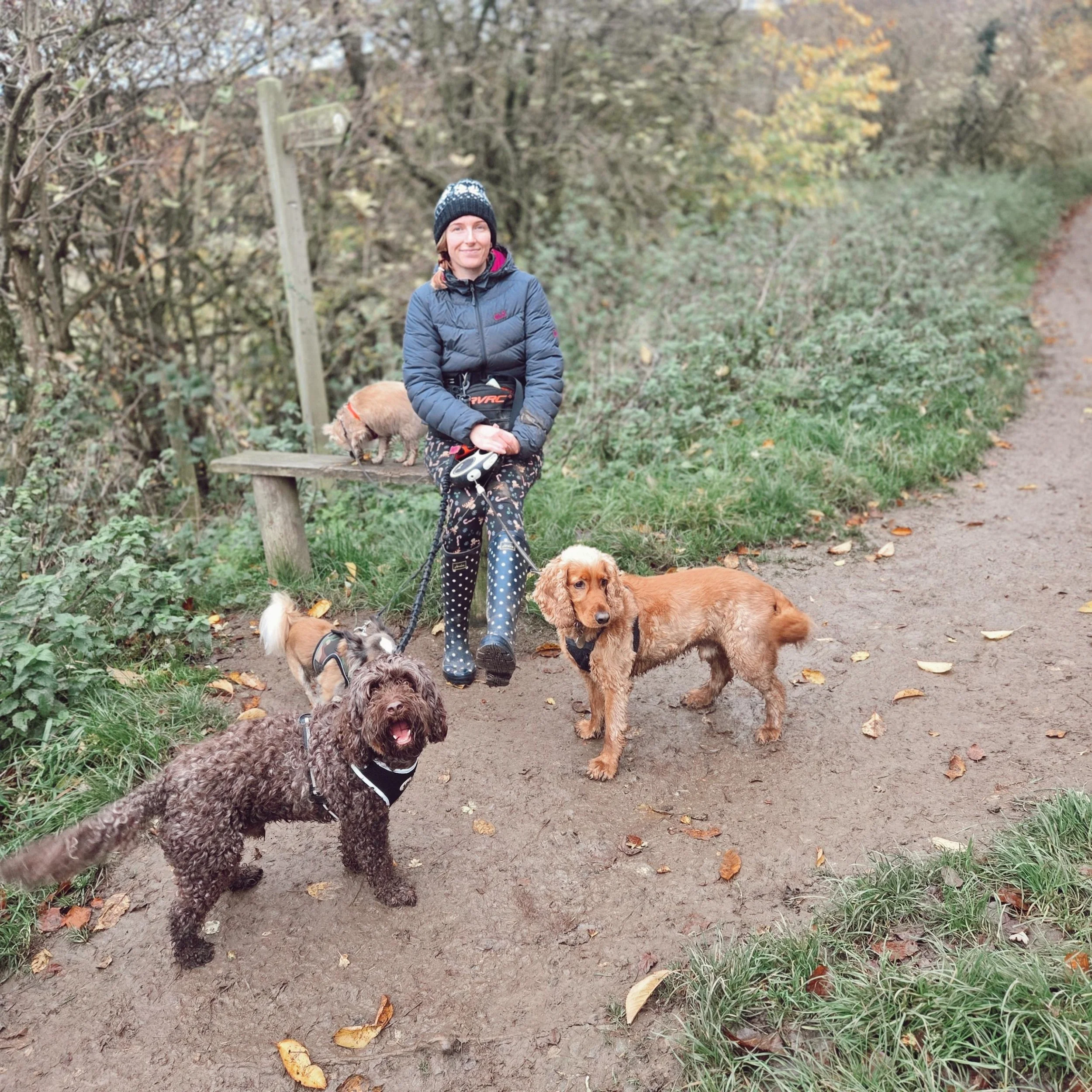
Walking dynamic routes (woodlands, coastal paths, quiet trails) allows dogs to engage in natural sniffing, exploring, and calm social tracking alongside a balanced pack.
How I Work: My Personal Approach & Values
"I can hand on heart say that keeping my group sizes small gives me complete control, ensuring every dog in my care stays safe, happy, and balanced."
Small Groups (Max 3 Alone, Up to 4 or 5 with a Helper)
While insurance and local bylaws often allow up to 6 dogs per walker, my absolute limit is 3 dogs on my own or up to 4 or 5 when working alongside a helper.
Complete Control: Small group sizes mean I can dedicate individual focus to every single dog.
Lower Stress: Dogs aren't jostled, crowded, or overwhelmed in transport or on the trail.
Sniffing Over Overstimulation
My walks focus on mental enrichment rather than exhausting physical chaos. Sniffing together releases endorphins and naturally lowers a dog's heart rate. I focus on keeping arousal levels balanced so your dog returns home calm, fulfilled, and well-behaved—not revved up or over-tired. A tired dog is not necessarily a happy dog. Click here for more on this (It is something I see a lot- i.e. ‘I run and run my dog… but he still comes home and rips up the pillows… what am I doing wrong?’)
Real Exploration over Enclosed Fields
Instead of spending time in a static enclosed paddock, I take dogs out to explore real-world environments- woodlands, beaches, and scenic trails where they can stretch their legs and explore new sights and scents. I do basic training and will carry on with whatever training you are doing- so hopefully when they get to the weekend and get to walk with you- they are well behaved for you and not pulling your arm off expecting an instant off lead zoomie with other dogs!
Off-Lead vs. On-Lead Management
If your dog has zero recall, they don't need to be excluded from group trail walks! While off-lead freedom requires reliable recall, dogs without recall stay safely on long leads during my group walks. They get to enjoy the smells, the scenery, and the pack dynamic safely alongside their friends.
🔴 The Cons (When My Service Might Not Be the Right Fit):
Not Ideal for High-Energy "Paddock Play" Addicts: If your dog thrives strictly on high-intensity, non-stop wrestling, ball-chasing, or sprinting in an enclosed area with large groups of dogs, a dedicated secure paddock walker or high-capacity play park service will be a better fit.
Strictly Capped Availability: Because I strictly limit my group sizes to 3 dogs on my own (and 4 with a helper) to maintain full control, spaces are limited and space on popular peak-hour slots fills up quickly, however I do always do my all to fit each dog in!
Must Be Comfortable on Lead/Long-Lead sometimes: Because we explore real-world public trails (woods, beaches, nature reserves), dogs without reliable recall will remain safely on a long lead throughout the walk rather than running completely free off-lead.